
When specifying or operating a heavy duty gantry crane, capacity is often expressed as a single number – 50 tons, 100 tons, or even 500 tons. However, experienced engineers and crane operators know that this number only tells part of the story. The real challenge in crane capacity lies in understanding the difference between static load and dynamic load, and how both influence safe working load (SWL), structural design, component selection, and long-term reliability.
In heavy-duty applications such as precast concrete production, steel mills, shipyards, power plants, and rail yards, gantry cranes are rarely subjected to purely static conditions. Instead, loads are lifted, accelerated, decelerated, and sometimes swung – all of which introduce dynamic forces that can significantly exceed the static weight of the load.
This article explores the fundamental differences between static and dynamic loads, explains how dynamic effects magnify stresses in heavy duty gantry cranes, and outlines how manufacturers and users account for these factors when determining crane capacity.
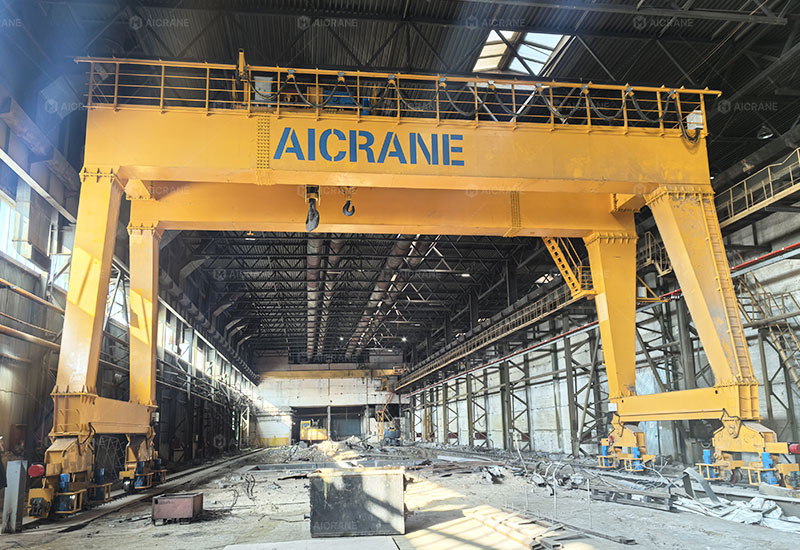
Understanding Static Load in Gantry Crane Operations
What Is Static Load?
A static load refers to a load that is applied gradually and remains constant over time, without motion or acceleration. In gantry crane terms, static load represents:
-
The actual weight of the lifted object
-
The weight of rigging, hooks, slings, and lifting devices
-
A load that is fully suspended but motionless
For example, if a gantry crane lifts a 100-ton steel component and holds it stationary in mid-air, the vertical force acting on the crane structure under ideal conditions is considered a static load.
Role of Static Load in Capacity Rating
Static load forms the baseline for capacity calculations. When an industrial gantry crane is labeled as a “100 ton crane,” this typically refers to its rated static capacity under standard design assumptions.
Static load determines:
-
Girder cross-section size
-
Column and leg strength
-
Wheel load distribution
-
Foundation and rail design
However, static load alone does not reflect real operating conditions, especially for heavy-duty cranes working at high duty cycles or in outdoor environments.
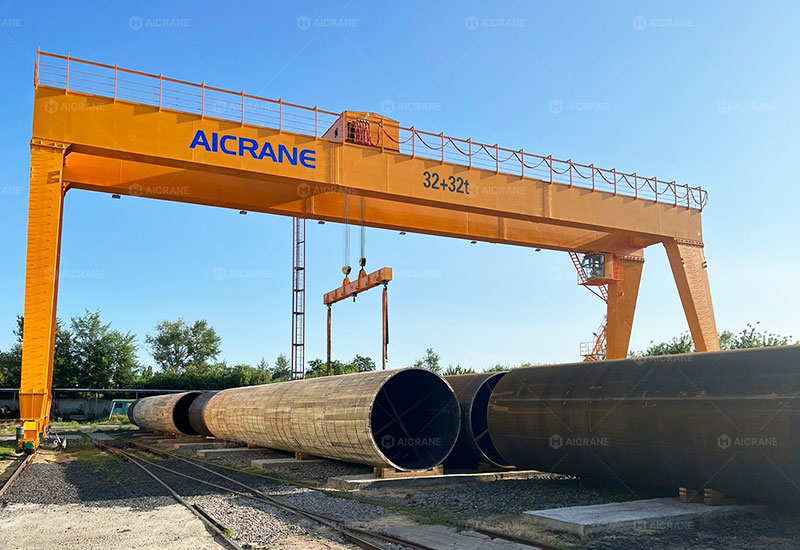
Understanding Dynamic Load in Heavy Duty Gantry Cranes
What Is Dynamic Load?
A dynamic load is created when the load or crane components are in motion. In gantry crane operations, dynamic loads arise from:
-
Hoisting acceleration and deceleration
-
Trolley travel along the girder
-
Crane travel along rails or rubber tires
-
Sudden starts, stops, or direction changes
-
Load sway and impact forces
-
Emergency braking events
Dynamic load is not a separate weight—it is a multiplier effect that increases the forces acting on the crane beyond the static load.
Dynamic Load Factor (DLF)
To quantify this effect, engineers use a Dynamic Load Factor (DLF). This factor accounts for the additional forces generated during movement.
Typical dynamic load factors in heavy-duty gantry cranes range from:
-
1.1 to 1.3 for smooth, controlled operations
-
1.4 or higher for high-speed, frequent, or harsh operating conditions
For example:
-
A 100-ton static load with a DLF of 1.25 results in an effective load of 125 tons on crane components during operation.
Key Differences Between Static and Dynamic Load
| Aspect | Static Load | Dynamic Load |
|---|---|---|
| Nature | Constant, motionless | Varies with movement |
| Source | Load weight only | Acceleration, braking, sway |
| Predictability | Highly predictable | Variable and transient |
| Design Impact | Baseline structural sizing | Fatigue, stress amplification |
| Safety Risk | Lower when isolated | Higher if not controlled |
This distinction is critical in heavy-duty gantry crane capacity planning, where dynamic effects often govern design more than static weight alone.
Why Dynamic Load Matters More in Heavy Duty Gantry Cranes
Increased Structural Stress
Dynamic loads introduce stress peaks in:
-
Main girders
-
End carriages
-
Legs and bracing systems
-
Wheel assemblies
Repeated dynamic stress accelerates fatigue damage, especially in welded joints and high-stress zones.
Influence on Hoisting Mechanism Selection
Hoists, wire ropes, drums, and gearboxes must withstand:
-
Peak dynamic tension
-
Repeated load cycles
-
Emergency braking loads
A hoist designed only for static load may suffer premature wear or failure under dynamic conditions.
Impact on Rail and Foundation Design
Dynamic loads increase:
-
Wheel loads during acceleration
-
Impact forces at rail joints
-
Settlement risks in foundations
This is particularly important for rail mounted gantry cranes (RMGs) handling heavy loads at high frequencies.
How Standards Address Static and Dynamic Loads
International crane standards explicitly account for dynamic effects:
-
FEM (Europe) introduces dynamic coefficients based on hoisting class and speed
-
ISO 4301 / ISO 8686 define load combinations including dynamic amplification
-
CMAA (North America) incorporates impact allowances into design loads
-
GB/T standards (China) apply dynamic load coefficients for different duty classes
These standards ensure that rated capacity already includes allowances for normal dynamic effects, provided the crane operates within its designed parameters.
Load Testing: Static vs Dynamic Capacity Verification
Static Load Testing
Static testing typically involves:
-
Lifting 110%–125% of rated capacity
-
Holding the load stationary
-
Checking for excessive deflection or permanent deformation
This test verifies structural strength under static conditions.
Dynamic Load Testing
Dynamic testing evaluates:
-
Hoisting, trolley, and travel motions
-
Braking performance
-
Control system response
-
Load sway behavior
Dynamic tests confirm that the crane can safely handle real operating conditions, not just theoretical loads.
Managing Dynamic Loads in Heavy Duty Gantry Crane Operation
Design-Level Controls
Manufacturers reduce dynamic effects through:
-
Variable Frequency Drives (VFDs) for smooth motion control
-
Optimized hoisting speeds
-
Anti-sway control systems
-
High-performance braking systems
Operational Best Practices
Operators can minimize dynamic loads by:
-
Avoiding sudden starts and stops
-
Maintaining steady hoisting speeds
-
Properly balancing loads
-
Regularly inspecting wire ropes and brakes
Maintenance and Monitoring
Dynamic load monitoring systems can:
-
Track actual load spectra
-
Detect overload events
-
Support predictive maintenance planning
Common Misconceptions About Crane Capacity
-
“Rated capacity equals maximum possible load”
In reality, rated capacity assumes controlled dynamic conditions. -
“If static load is within limits, operation is safe”
Dynamic effects may still cause overload conditions. -
“Higher capacity always means safer operation”
Poor control and high dynamic loads can still compromise safety.
Conclusion
In heavy duty gantry crane engineering, the difference between static load and dynamic load is far more than a theoretical concept – it is a fundamental factor that defines crane capacity, safety, and longevity.
Static load provides the starting point for capacity design, but dynamic load determines how that capacity performs under real-world conditions. Acceleration, braking, and load movement can significantly increase stresses on crane structures and components, making dynamic load management essential for heavy-duty applications.
By understanding dynamic load factors, complying with international standards, and implementing proper design and operational controls, operators and project planners can ensure that heavy duty gantry cranes perform safely, efficiently, and reliably throughout their service life.